
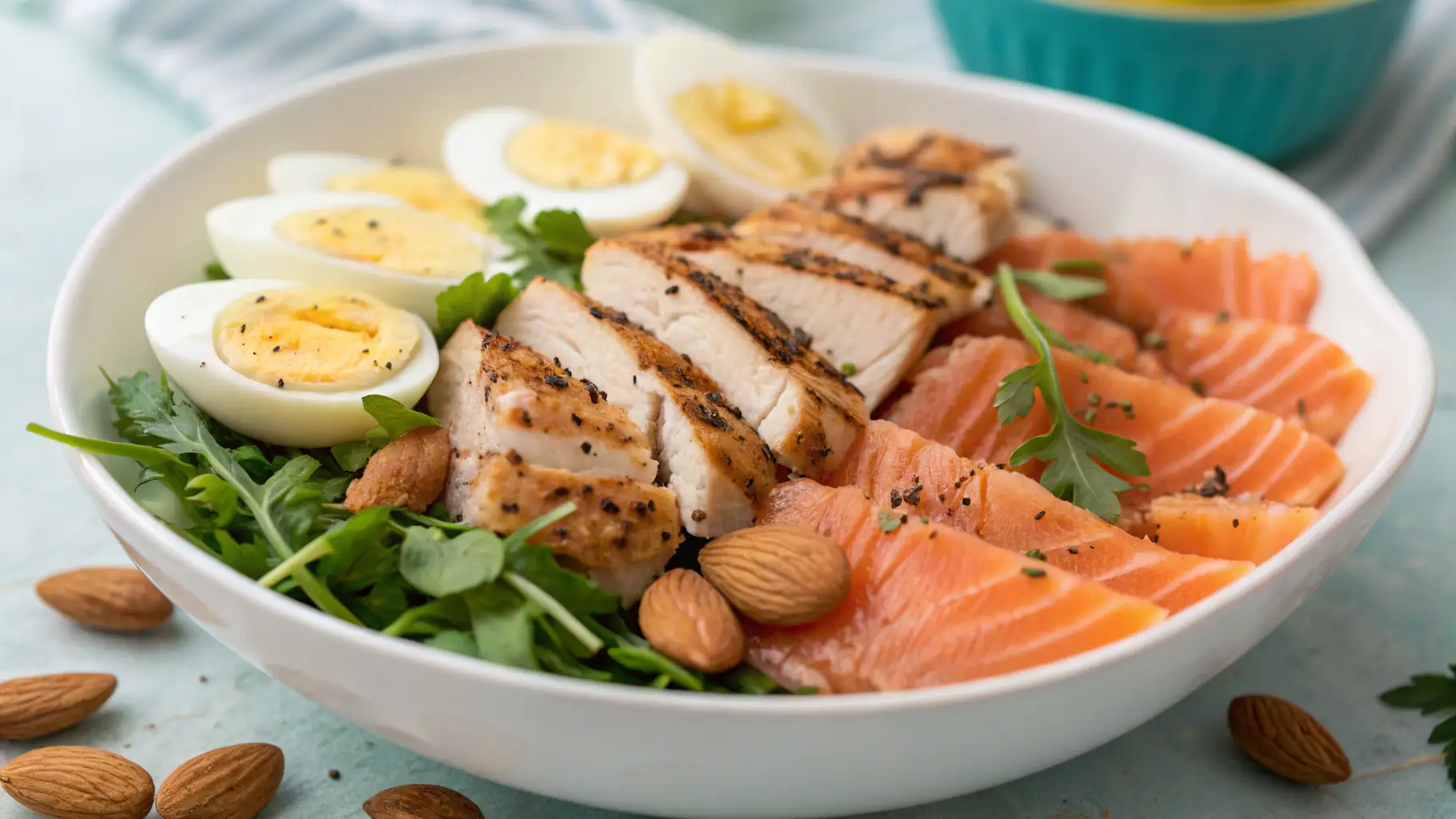
Protein can support fullness and help preserve muscle while losing weight, but more is not automatically better. The useful target is enough protein within an overall eating pattern you can maintain.
Why protein matters during fat loss
Protein provides amino acids used throughout the body. During a calorie deficit, adequate protein—combined with resistance training—can help reduce the amount of lean tissue lost. Protein-rich meals may also feel more satisfying than meals dominated by refined carbohydrates or added fats.
How much do you need?
Needs vary with body size, age, activity, total calorie intake, and health status. Rather than chasing a universal number, include a meaningful protein source at each main meal and adjust with a registered dietitian or other qualified clinician when precision matters. People with kidney disease or certain other conditions should seek individualized advice before substantially increasing protein.
Protein-rich food options
- Fish, poultry, lean meat, eggs, and dairy foods
- Beans, lentils, tofu, tempeh, and edamame
- Greek-style yogurt, cottage cheese, or fortified soy alternatives
- Protein powders when convenience is useful, not as a requirement
Distribute protein across the day
Spreading protein across meals can make it easier to reach an appropriate intake and gives each meal more staying power. Breakfast is a common place to add protein—for example, eggs, yogurt, tofu, or leftovers—without changing the rest of the day dramatically.
Pair protein with the rest of the plate
Protein does not replace fiber, fruits, vegetables, carbohydrates, or dietary fats. A useful meal combines a protein source with produce and a satisfying source of carbohydrate or fat. That supports nutrition and makes the plan easier to sustain.
Common mistakes
- Adding protein products without accounting for their total calories.
- Relying on shakes while neglecting varied whole foods.
- Assuming protein alone will create fat loss.
- Increasing intake aggressively despite a medical condition that requires guidance.
Protein is one part of the picture. Put it into context with our sustainable fat-loss guide and evidence-based overview of long-term weight loss.
This article is educational and does not provide individualized medical advice.